Your website is your digital storefront, your first impression, and your hardest-working salesperson. Yet in 2026, roughly one in four U.S. small businesses still has no website at all, according to SCORE research (2024). For the ones that do, professional web development services have moved from a nice-to-have to a competitive requirement.
This guide covers what web development services actually include, what they cost in 2026, how they compare to DIY builders, and how to choose a partner you can trust. You’ll get real numbers, real sources, and a clear path from “no site” to “site that works.”
Key Takeaways
- Professional small business websites run $8,000 to $25,000 in 2026, with 63% of projects landing under $15,000 (Studio O’Brien, 2026).
- 61% of small business buyers spent under $10,000 on their most recent website project (Clutch, 2026).
- Only about 22% of small business websites are fully mobile-optimized, even though mobile drives over half of global web traffic (BrightLocal, 2024).
- The global web development market is $76.25 billion in 2026, growing to $102.28 billion by 2030 (The Business Research Company, 2026).
- DIY builders look cheap, but professionally built sites convert far more consistently because they’re built for speed, search, and trust.
In this article
What Are Web Development Services for Small Business?
Web development services for small business are professional offerings that design, build, launch, and maintain a company’s website. They span strategy, visual design, code, content setup, search optimization, hosting, and ongoing care. A provider delivers a finished digital asset you own, not a template you rent.
The scope is broader than most owners realize. When you hire web development services, you’re typically getting:
- Strategy and discovery — defining goals, audience, pages, and conversion paths before any design work
- User experience (UX) and visual design — layout, branding, navigation, and mobile responsiveness
- Front-end development — the HTML, CSS, and JavaScript that render what visitors see
- Back-end development — servers, databases, forms, booking systems, and payment processing where needed
- Content management setup — a CMS so your team can edit pages without writing code
- Search engine optimization (SEO) — technical structure, page speed, and metadata that help Google find you
- Hosting, security, and maintenance — a reliable server, SSL, backups, and updates after launch
One common misconception: web design and web development are the same thing. Design is the visual layer. Development is the engineering that makes it function. Good web development services include both, which is exactly why the phrase “web development services for small business” covers such a wide range of work.
Why Does a Small Business Need Professional Web Development in 2026?
In 2026, the web development market reached $76.25 billion globally and is projected to grow to $102.28 billion by 2030 at a 7.4% CAGR, per The Business Research Company’s Web Development Market Report (2026). That growth reflects one simple fact: businesses that invest in their websites are winning customers from the ones that don’t.
Here’s why this matters for a small business specifically:
Customers judge you by your site. An estimated 75% of consumers assess a company’s credibility based on its website design (Marketing LTB, 2026). And 81% of shoppers research online before making a purchase. If your site looks dated, loads slowly, or is missing on mobile, you’re losing trust before a single conversation happens.
A huge share of your market is still offline. SCORE research (2024) found that 27% of U.S. small businesses have no website, and 35% of owners say they feel “too small” to need one. That’s a gap competitors are happy to exploit. When Adobe asked consumers, 31% said they chose not to shop at a small business specifically because it had no website.
Mobile is no longer optional. Mobile devices accounted for about 52% of global website traffic in Q1 2026 (Statista, 2026). Yet BrightLocal’s research shows only about 22% of small business websites are fully mobile-optimized. That mismatch is revenue being left on the table.
Here’s what most guides skip: a website isn’t a one-time purchase anymore. It’s an operating asset that needs steady investment to keep ranking, loading fast, and staying secure. The businesses winning in 2026 treat their site the way they treat their bookkeeping — as something maintained on a schedule, not fixed once a year.
According to Clutch’s 2026 survey, 43% of small businesses plan to invest more in web development this year. The smart money is on the same few things: speed, mobile experience, and search visibility. Skip those and no amount of design polish will rescue your rankings.
What Does Professional Web Development Actually Include?
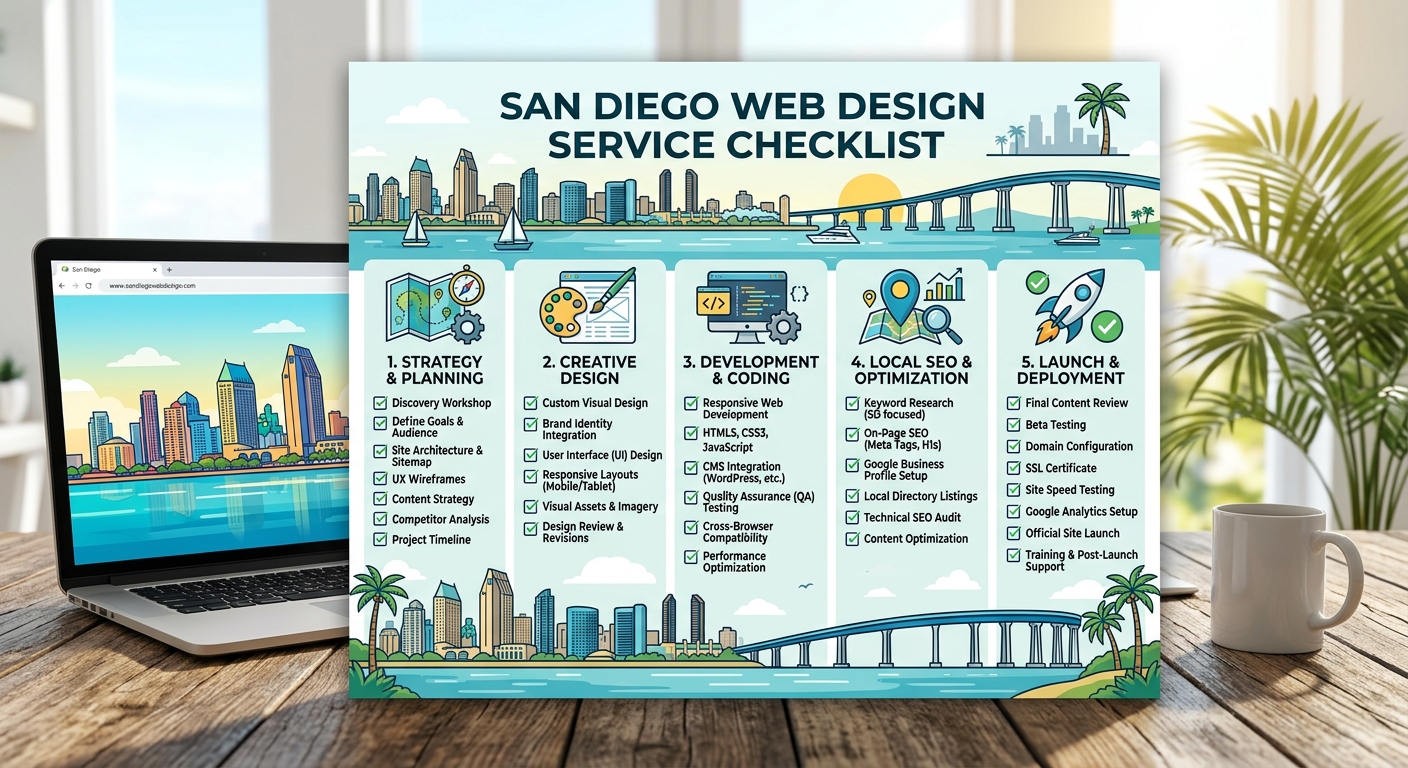
A professional web development engagement is a complete build, not just a pretty page. In 2026, a full-service provider handles the entire lifecycle:

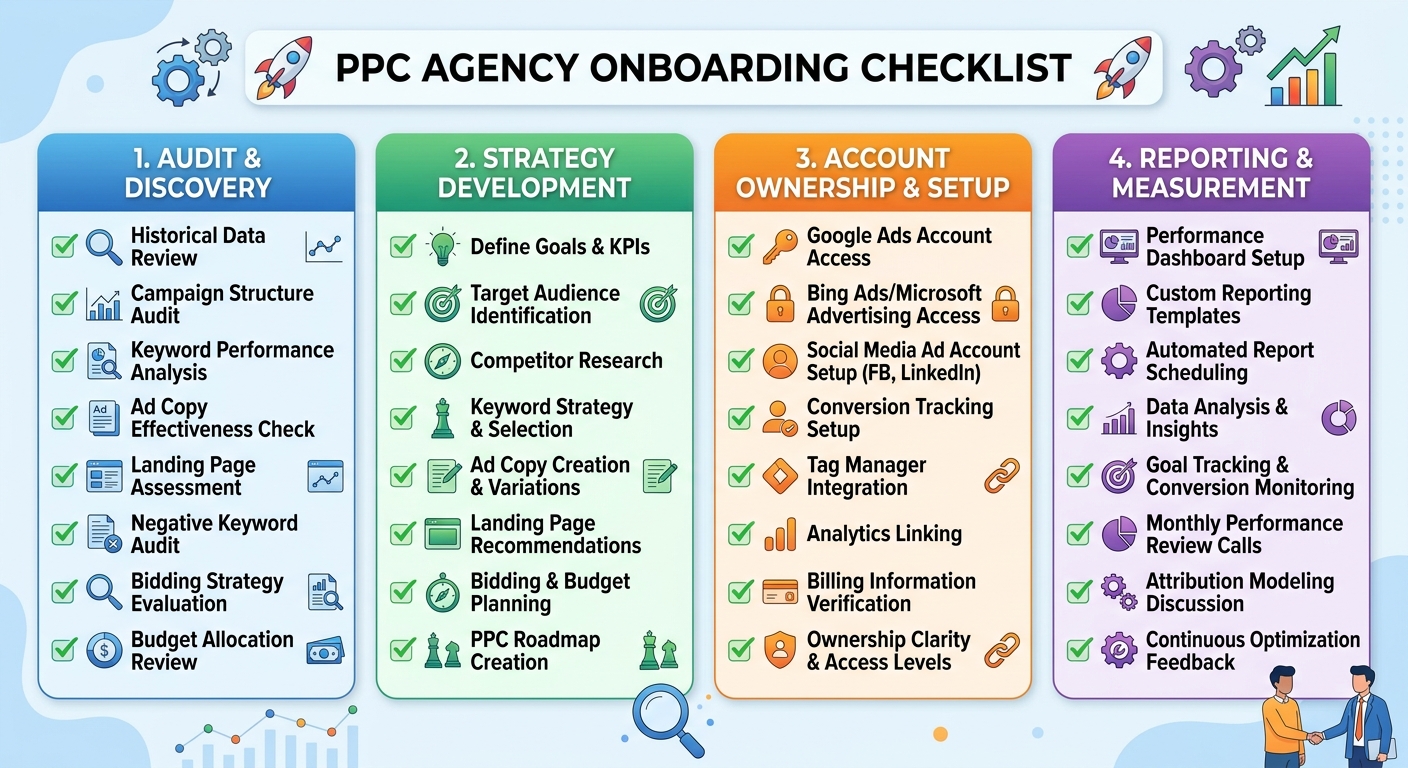
- Discovery and strategy. The provider learns your business, customers, competitors, and goals. They map the pages you need and define what a “good” visit should accomplish — a call, a booking, a sale.
- Design and prototyping. Wireframes become mockups. You approve the look, layout, and mobile behavior before any code is written.
- Development and build. Front-end and back-end work happens. Forms, booking tools, payment, and integrations (like Google Analytics or a CRM) get connected.
- Content setup. Copy, images, and pages go in. A CMS is configured so your team can update it later without technical help.
- Technical SEO. Site structure, meta tags, page speed, structured data, and crawlability are tuned so search engines can index you properly.
- Quality assurance and testing. Cross-browser checks, mobile testing, load-speed testing, and form testing catch problems before launch.
- Launch and hosting. The site goes live on secure hosting with SSL, backups, and monitoring.
- Maintenance and support. Updates, security patches, content changes, and performance reviews keep the site healthy month after month.
When we take on a small business build at Web Works LLC, the discovery phase is where most owners get surprised. They arrive with a color preference and leave with a conversion plan. Time and again, the pattern is the same: the businesses that invest those first hours in clarity end up with sites that actually generate calls, while the ones that rush straight to design come back six months later for a rework.
Speed is the invisible salesperson. Google’s research shows that 53% of mobile visitors abandon a page that takes more than 3 seconds to load. A professional build optimizes images, caches pages, and trims code so you stay under that threshold. DIY templates rarely do any of that out of the box.
Security is another reason to go professional. Verizon’s 2025 Data Breach Investigations Report found that 43% of cyberattacks target small businesses, and IBM’s Cost of a Data Breach Report puts the average breach at $4.88 million (2024). A development partner keeps your platform patched, your backups tested, and your site hardened against the attacks that target the small guys precisely because they’re assumed to be unprotected.
How Much Do Web Development Services Cost in 2026?
In 2026, a professionally built small business website typically costs $8,000 to $25,000, and 63% of all web projects come in under $15,000 (Studio O’Brien, 2026). Clutch’s survey data (2026) agrees with the shape of that range: 61% of small business buyers spent under $10,000 on their most recent project, and 84% spent under $20,000.
Cost depends on scope, not vanity. Here’s how the routes break down:
| Build Route | Typical 2026 Cost | What You Get | Best For |
|---|---|---|---|
| DIY website builder | $100-$1,600 | Template site on Wix/Squarespace/WordPress | Absolute minimum budget, willing to learn |
| Freelancer build | $3,000-$8,000 | Customized template, basic SEO, one person | Simple sites, single point of contact |
| Boutique agency | $8,000-$15,000 | Custom design, 10-15 pages, CMS, technical SEO | Small business that needs to look established |
| Custom / ecommerce | $15,000-$25,000+ | Advanced features, booking, payments, integrations | Growing business with real conversion needs |
Those numbers come from pricing data compiled by Digital Applied (2026) and Studio O’Brien (2026). The middle band — $8,000 to $15,000 — is where most serious small businesses land. It buys you a custom design, a CMS you can actually use, mobile optimization, and technical SEO built in from day one.
Why does the price vary so much? Three drivers: design originality, number of pages, and features. A custom design costs more than a template. Ten pages cost more than five. A booking system, payment processing, or CRM integration adds thousands. Get itemized quotes from three providers and compare what’s actually included — hosting, SSL, SEO, training, and how many revision rounds you get.
Maintenance is a separate line item you shouldn’t skip. Plan for roughly 10-20% of the build cost per year for hosting, updates, backups, and small improvements. A $12,000 site is a real asset; treating it like a one-time expense is how websites quietly break.
Web Development Service vs. DIY Builders: Which Wins?
DIY builders feel free because there’s no invoice. The truth in 2026 is that the real cost shows up later — in lost conversions, poor search rankings, and the hours you’ll never get back. Let’s compare honestly.
The conversion gap is the deciding factor. Professionally built sites are engineered around a clear call to action on every page. Research cited by Small Business Trends found that roughly 70% of small business homepages lack an effective call to action. A developer builds CTAs, form flows, and speed into the foundation. A DIY template leaves them to you.
Speed separates the two more than looks. Google reports that a one-second delay in page load can cut conversions by up to 7%, and 53% of mobile visitors abandon pages taking over 3 seconds. Professional builds optimize for these thresholds. Most template sites need significant tweaking to pass.
DIY hides an ownership problem. You don’t own your Wix or Squarespace page in the same way you own a custom site. Features, design, and data live inside a platform you rent. With professional web development services, you own the code, the content, and the domain — and you can move it wherever you want.
The verdict isn’t binary. If you’re a brand-new business with a $500 budget and weekend to spare, a builder gets you online fast — and that’s a legitimate first step. The moment you need bookings, payments, serious SEO, or a site that represents a real brand, professional web development services become the cheaper option in the long run. You’re paying for expertise, speed, and an asset that converts.
According to a 2026 study from Studio O’Brien, professional small business sites run $8,000-$25,000, and most land under $15,000. Compared against the weeks of your time a DIY build swallows — plus the conversions it quietly loses — that’s often the better investment for a business serious about growth.
How to Choose the Right Web Development Partner
Choosing the right web development provider is the difference between a launch and a relationship. Here’s a vetting framework that works in 2026:
1. Look for proof, not promises. Ask for 3-5 live sites in your industry or of similar size. Check each one on your phone. Slow or broken sites in a portfolio are a red flag, no matter how pretty the screenshots are.
2. Confirm who owns what. The contract should state clearly that you own the domain, the content, and the code. Ask what happens if you part ways. A provider who hesitates here is telling you something.
3. Get the maintenance story. Websites need updates, backups, and security patches. Ask what happens after launch: monthly care plans, response times, and what’s included for what price.
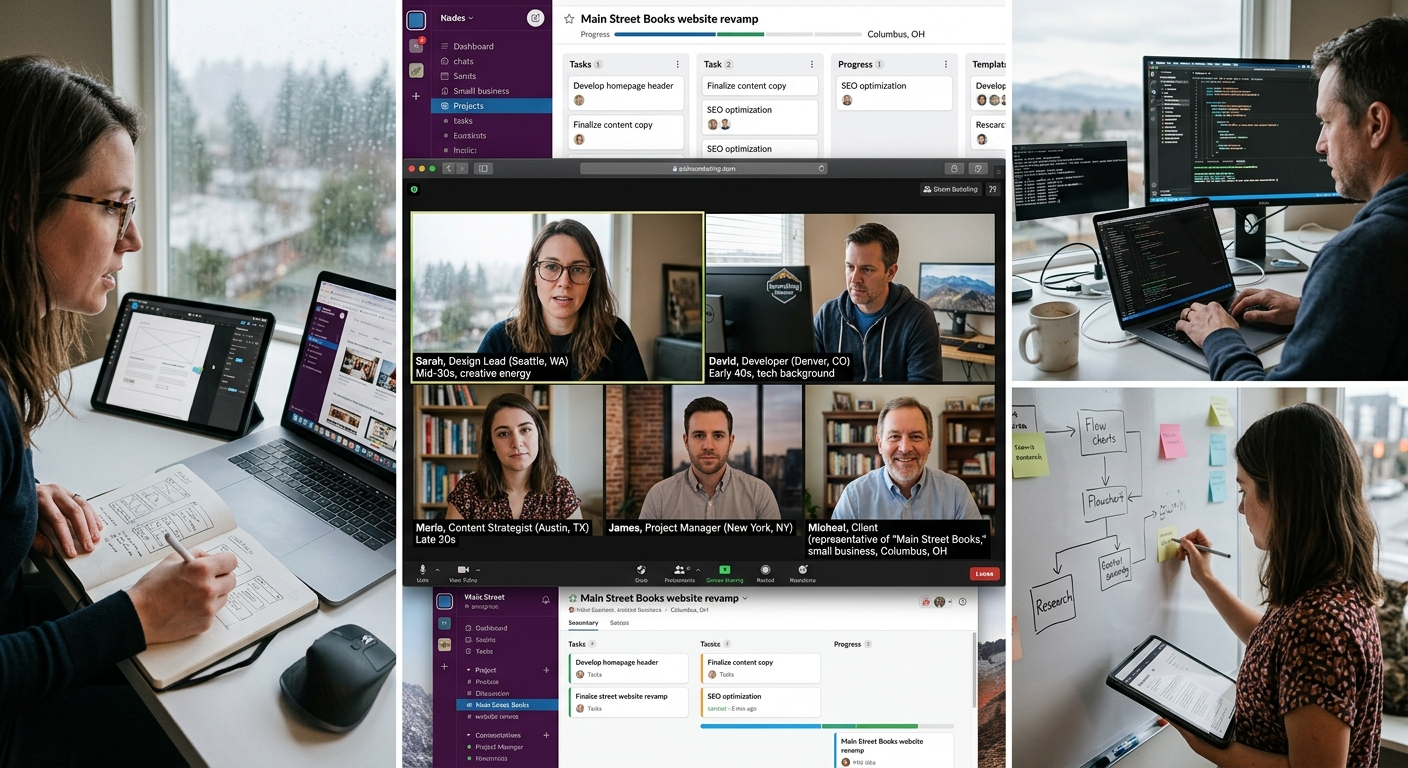
4. Check communication and process. You’ll live with this partner for weeks. Ask how often you’ll see progress, how revisions work, and who your point of contact is. Avoid vendors who treat the discovery phase as a formality.
5. Understand the SEO and speed baseline. Technical SEO, Core Web Vitals, and mobile responsiveness should be in the scope, not an upsell. If a provider needs to sell you “mobile-friendly” as an add-on, walk away.
From our client work at Web Works LLC, the single strongest predictor of a smooth build is the provider’s willingness to say no. The best development partners push back on scope creep, explain trade-offs, and tell you when a feature isn’t worth the cost. The ones who say yes to everything usually deliver late, over budget, or both. Treat that honesty during the sales call as a preview of the whole relationship.
Red flags to avoid: offshore teams promising $500 sites with unlimited revisions, portfolios with no mobile screenshots, contracts that lock you into hosting you can’t leave, and providers who can’t explain what they’re building and why.
How Do You Launch and Maintain a Business Website?

Launching a website is a process, not an event. A professional web development engagement follows a clear path, and knowing the stages keeps you in control of cost and timing.
Stage 1: Plan (week 1). Goals, audience, pages, features, content inventory, and a sitemap. Clutch’s research suggests custom builds typically take 3-5 months end to end, so a tight plan protects your timeline.
Stage 2: Design (weeks 2-4). Wireframes, then visual design, then mobile behavior. You review and approve before code starts.
Stage 3: Build (weeks 4-8). Development, content entry, forms, integrations, and SEO setup happen in parallel. Ask for a staging link so you can watch it come together.
Stage 4: Test and launch (weeks 8-10). Cross-browser checks, speed testing, form testing, and a final content review. Then the site goes live, SSL installed, analytics connected.
Stage 5: Maintain (ongoing). Updates, backups, security patches, and content refresh. This is where most small business sites are won or lost. A site that’s ignored for 18 months quietly loses rankings, speed, and trust.
Content is the fuel for the whole machine. A site with accurate services, real photos, clear pricing, and current contact details outperforms a prettier site that’s stale. Plan to review and refresh your pages at least quarterly — search engines and customers both reward recency.
Maintenance isn’t optional anymore. Verizon’s 2025 Data Breach Investigations Report notes that 43% of cyberattacks target small businesses. Regular patching, tested backups, and SSL monitoring aren’t luxury add-ons; they’re table stakes for running a business website in 2026.
Advanced: How AI and Automation Are Reshaping Web Development
If you’re already investing in a website, here’s the shift to watch: AI is changing both how sites are built and how they’re found. In 2025, Stack Overflow’s Developer Survey found that 84% of developers are using or planning to use AI tools, and analysis from Index.dev indicates AI now writes roughly 41% of code produced. The result? Faster builds, lower costs, and more accessible customization — but also a new skill gap.
Here’s what that means for you as a business owner:
AI builders are faster but not free. Modern AI website builders can spin up a basic site in minutes. They’re great for a first draft or a landing page. But they still struggle with complex business logic, brand-grade design, real security, and the technical SEO that AI search engines reward. For a business that needs to look established, a human-led professional build still wins.
AI search changed what “optimized” means. ChatGPT, Perplexity, and Google’s AI Overviews now answer questions by citing sources. Sites with clear structure, accurate content, and proper schema markup get quoted; messy sites get ignored. This is a new reason to work with a partner who understands structured data and content quality — not just code.
At Web Works LLC, we’ve seen AI tools compress our own build timelines by nearly half on standard projects. But the pattern is consistent: AI handles the repetitive code, while a human still makes the strategy, design, and quality calls. The owners who get the best results are the ones who treat AI-assisted development as a faster path to the same professional standard, not as a way to skip the planning that makes a site convert.
The bottom line for 2026 and beyond: AI has lowered the entry barrier to having a website. It has not lowered the bar for having a website that ranks, converts, and stays secure. Those outcomes still come from strategy, craftsmanship, and maintenance — which is exactly what professional web development services provide.
According to Stack Overflow’s 2025 Developer Survey, 84% of developers now use or plan to use AI tools in their workflow. That means the cost of custom work is falling, and small businesses can get more for the same budget than ever before. The opportunity is real — but only if you spend it with a partner who knows what “done right” looks like.
Tools & Resources for Small Business Websites
Whether you’re researching providers or prepping for a build, here are the tools worth knowing in 2026. We’ve used most of these directly in client work at Web Works LLC.
Hosting & platforms:
- WordPress — powers about 43% of the web (W3Techs, 2025). Flexible, scalable, and what most small business sites run on. Best for: nearly every business.
- Managed WordPress hosting — providers like Bluehost or WP Engine handle updates, security, and speed. Best for: owners who want the platform without the upkeep.
- Shopify — the go-to for product-based small businesses. Best for: ecommerce without deep technical work.
Design & testing:
- Figma — the standard for design collaboration. Best for: reviewing wireframes and mockups with your provider.
- Google PageSpeed Insights — tests load speed and Core Web Vitals. Best for: checking any site you’re considering buying, or benchmarking your own.
SEO & analytics:
- Google Search Console — shows how Google sees your site, what queries find you, and what breaks. Free and essential.
- Google Analytics 4 — tracks visitors, conversions, and where traffic comes from. Best for: proving your site works.
Content & trust:
- Unsplash / Pexels — free stock photography. Best for: filling a new site without a photo budget.
- SSL and privacy tools — your provider should bundle SSL, and you’ll want privacy/terms pages for compliance.
Our honest advice: don’t try to assemble this stack yourself unless you’re technical. A good development partner brings all of it together, which is the actual value of web development services — not the code, but the integration of strategy, design, speed, SEO, and maintenance into one working asset.
Getting Started with Web Development Services
Ready to move? Here’s your three-step path, in order.
Step 1: Write your website brief (today, 30 minutes). Answer three questions: Who is my ideal customer? What do I want them to do on my site? What pages do I need? You don’t need perfect copy — you need clarity. This brief is the single biggest lever on cost and quality.
Step 2: Talk to 2-3 providers (this week). Use the vetting framework from this guide. Ask for portfolios, ownership terms, maintenance plans, and itemized quotes. Compare what’s included, not just the price. Book a consultation with a partner who does discovery properly — it will show immediately.
Step 3: Approve a plan and start (within two weeks). Commit to the plan and the timeline. Gather your photos, logos, and product info early; content delays are the #1 cause of blown deadlines. Then let the process run — a professional build takes 4-10 weeks for most small business sites.
The most common hesitation is cost. It’s fair. But run the math: 31% of U.S. shoppers said they chose not to shop at a small business with no website (Adobe). A $10,000 site that wins a handful of those customers pays for itself fast. Your website is the cheapest salesperson you’ll ever hire — it works nights, weekends, and never asks for a raise.
Frequently Asked Questions
What are web development services for small business?
Web development services design, build, launch, and maintain a company’s website. They cover strategy, UX, visual design, front-end and back-end code, content setup, technical SEO, hosting, and ongoing maintenance. In 2026, most small business projects run $8,000-$25,000, with 63% landing under $15,000 (Studio O’Brien, 2026).
How much do web development services cost in 2026?
A professionally built small business website costs $8,000-$25,000 in 2026. Freelancers charge $3,000-$8,000, boutique agencies $8,000-$15,000, and custom or ecommerce builds $15,000-$25,000+ (Digital Applied, 2026). Clutch’s 2026 survey found 61% of small business buyers spent under $10,000 on their most recent project.
Do I need a website for my small business?
Yes. SCORE research (2024) found 27% of U.S. small businesses have no website, and 31% of consumers said they chose not to shop at a small business without one (Adobe). With 81% of shoppers researching online before buying, a professional website is the minimum standard for credibility in 2026.
Can I build my website myself instead of hiring developers?
You can, and DIY builders work for minimal budgets — sites start around $100-$1,600. But only about 22% of small business websites are fully mobile-optimized (BrightLocal), and 53% of mobile visitors abandon pages that take over 3 seconds to load (Google). Professional development delivers the speed, SEO, and conversion structure DIY rarely achieves.
How long does it take to build a small business website?
Most professional small business builds take 4-10 weeks depending on scope. Clutch’s research puts average custom builds at 3-5 months end to end, including content, design, development, and testing. A clear brief and early content delivery are the two fastest ways to shorten that timeline.
Conclusion
Your website is the most visible asset your business owns. In 2026, professional web development services for small business run $8,000-$25,000, deliver the speed and mobile experience customers now expect, and pay for themselves through conversions a DIY template quietly loses.
Here’s what to remember: most small business sites fail on fundamentals — slow load times, poor mobile design, and missing calls to action — not on looks. A professional partner fixes all three at the foundation, then keeps the site healthy with maintenance and updates. The market is only getting more competitive; SCORE research (2024) shows 27% of your competitors are still offline, and that gap won’t last.
The next move is simple. Write a one-page brief about your customers and goals, then book a consultation with a web development partner who does discovery properly. Whether you build now or next quarter, a clear plan will save you money and months of frustration.