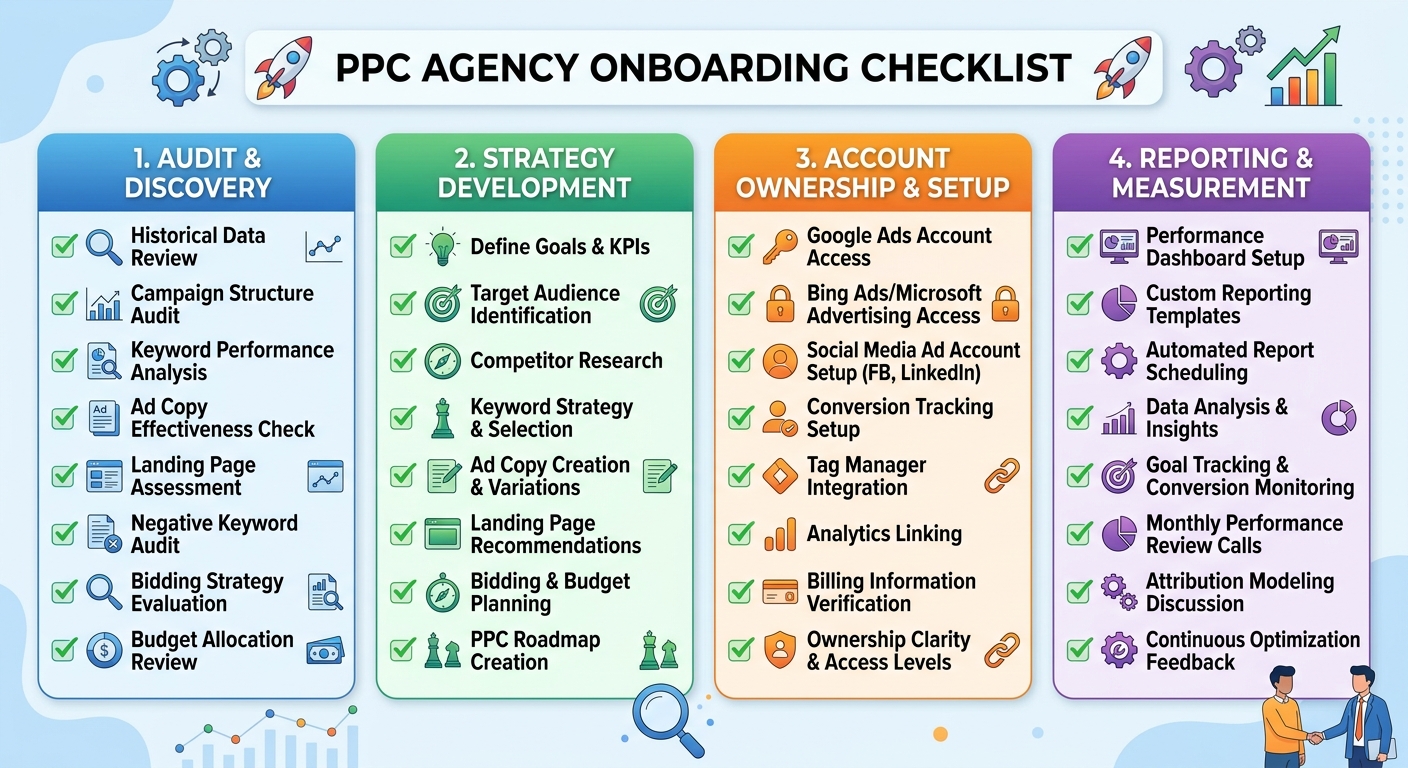

In 2026, roughly 75% of consumers judge a business’s credibility from its website design alone (Stanford Web Credibility Research, 2026). That single sentence explains why web design services for small business are no longer a nice-to-have. They are the front door to every sale. This guide walks you through what a small business website actually costs this year, what returns to expect, how your site fits into local and AI search, and how to pick a partner who builds for conversion instead of decoration.
Key Takeaways
- In 2026, professional small business websites run about $2,500 to $9,500 for a 5-to-15-page build (Sprout Sage Solutions, 2026).
- 75% of consumers judge credibility from design alone (Stanford, 2026), and 29% of small businesses still have no website (Review42, 2026).
- 46% of Google searches carry local intent; the sites that rank and convert locally pull the highest-value traffic (Google, 2026).
- Good web design returns $100 for every $1 invested in user experience (Forrester, 2026).
- 88% of businesses are invisible to AI search, so a site built for AI citation is now a competitive edge (Omni Eclipse, 2026).
In this article
Why Does Web Design Matter More in 2026 Than Ever?
In 2026, the global web design market is worth about $60.9 billion and growing at an 8.5% annual rate toward $92 billion by 2030 (Business Research Insights, 2026). The money flowing into web design is not vanity spending. It reflects a structural shift: the website is now the first place a prospect forms an opinion, checks trust signals, and decides whether to call.
The stakes keep climbing because the buying window shrank. In 2026, 75% of consumers decide which business to use in under 30 minutes, and 28% decide in under five (BrightLocal Consumer Search Behavior, 2026). Your site has seconds — not days — to earn that decision. When 94% of first impressions are design-related and users form a visual opinion in 0.05 seconds (Google / Carleton University, 2026), the quality of your layout is a business metric, not an aesthetic one.
For a small business, this is good news in one specific way: most of your local competitors still run outdated sites. Only about half of small businesses have what researchers call a “professionally designed” website (Marketing LTB, 2026). That gap is your opening.
How Much Do Web Design Services Cost a Small Business in 2026?
In 2026, a professional small business website with 5 to 15 pages runs about $2,500 to $9,500, with independent freelancers starting near $1,500 and full-service agencies running $9,500 to $20,000 (Sprout Sage Solutions, 2026). A second 2026 teardown puts the realistic project budget for most service-based local businesses between $4,000 and $15,000 (GruffyGoat, 2026).
The wide range comes down to three variables: who builds it, how custom it is, and what it must do.
| Route | Typical cost | Best fit | Trade-offs |
|---|---|---|---|
| DIY builder (Wix, Squarespace) | $200–$600/yr | Absolute minimum budget | Limited conversion tuning, DIY support |
| Template-based freelancer | $1,500–$4,000 | Simple brochure sites | One designer, limited depth |
| Boutique agency | $6,000–$35,000+ | Service businesses needing SEO + conversion | Higher upfront investment |
| Full custom / ecommerce | $9,500–$75,000 | Stores, complex integrations | Strategy and tech heavy |
Data pulled from Sprout Sage Solutions (2026) and GruffyGoat (2026) pricing teardowns.
What you are really buying is not pixels. It is the ability to turn traffic into booked calls. Forrester Research has quantified this for a decade: every $1 invested in user experience returns about $100, a 9,900% ROI (Forrester, 2026). A site that loads fast, answers clearly, and guides a visitor to contact you pays for itself many times over. A slow, cluttered site is the most expensive thing you can build, because it quietly rejects the visitors you already paid to attract.
What Should a Small Business Website Actually Do in 2026?
Roughly 46% of all Google searches now carry local intent — that is close to 3.9 billion local searches every single day (Google, 2026). And 76% of people who run a “near me” search visit a business within 24 hours, rising to 88% within a week (Google / Think with Google, 2026). A local business website is not a brochure. It is a local lead-capture machine.
That reframes the job of web design. In 2026, a small business site must:
- Answer the buying question in seconds. Use clear headings, a plain offer, and one obvious call-to-action. Every page should say what you do, who you help, and how to contact you.
- Convert on mobile. Mobile drives roughly 64% of global web traffic (Statista, 2026), and most local searches start on a phone. A site that is not mobile-first gives up the majority of its traffic.
- Build trust with design and reviews. Nearly 75% of consumers make credibility judgments from design cues, and 97% read online reviews before choosing a local business (BrightLocal, 2026).
- Load fast. A 1-second delay in load time can drop conversions by up to 7%. Slow is not a speed problem; it is a revenue problem (Akamai, 2025).
Most small business websites are not doing these four jobs. Roughly 29% of small businesses still have no website at all, and the most common reported reason is “not relevant to my industry” (34%) rather than cost (Review42, 2026). That is a misreading of the market. The businesses that do have a website report roughly 2x higher revenue growth on average than those without one (Review42, 2026).
Is a Website Enough, or Do You Need Local and AI Search Too?
The short answer: a website alone is not enough in 2026. 45% of consumers now use ChatGPT or another AI tool for local business recommendations, up from just 6% a year earlier (SOCi Local Visibility Index, 2026). Yet an independent audit of 1,700 businesses found that 88% did not appear when ChatGPT was asked natural buying questions in their category (Omni Eclipse, 2026). Even more striking: 77% of businesses ranking on Google page one were invisible to ChatGPT (Omni Eclipse, 2026).
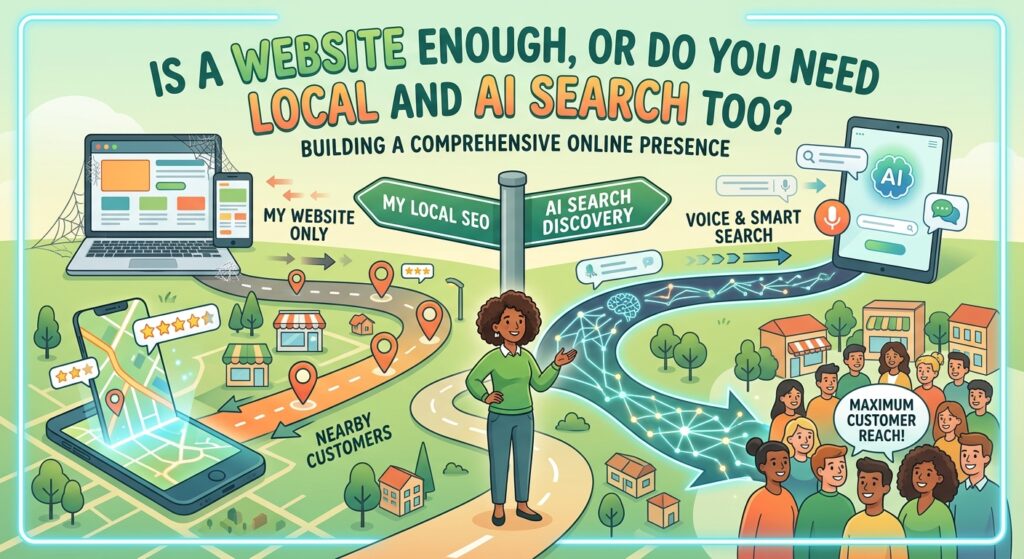
The implication for a small business is uncomfortable but actionable. A strong Google ranking no longer guarantees you appear when someone asks an AI assistant “who builds websites in [my city].” AI systems select recommendations based on different signals: entity recognition, structured business data, citation frequency, and consistent information across review platforms and directories.
What surfaces your business in both worlds, in 2026:
- Structured, accurate business information (name, address, phone, category) everywhere — your site, Google Business Profile, and directories.
- Clear, question-answering content on your site — the exact format AI assistants extract and cite.
- A healthy review profile — AI models weight reviews heavily when recommending local businesses; the average ChatGPT-recommended business rates about 4.3 stars (SOCi, 2026).
- Schema markup (structured data) that tells both Google and AI crawlers exactly what your company is and does.
This is why modern web design services for small business include an SEO and AI-visibility layer, not just pretty pages. A build that ignores these signals leaves you invisible to the fastest-growing channel in local discovery.
How Do You Choose a Web Design Partner That Delivers ROI?
Only about 42% of mobile sites and 63% of desktop sites passed all three Google Core Web Vitals in 2026 (Google CrUX, 2026). In plain terms, most websites your prospects visit are technically broken. The right web design partner is the one who treats speed, structure, and conversion as core deliverables — not extras.
Here are the concrete questions to ask any agency or freelancer before you sign:
- “How will this convert?” The answer should mention calls-to-action, page goals, and a funnel — not just colors and fonts.
- “Is it built for search and AI?” Ask for schema markup, semantic headings, and answer-first copy. If they look confused, keep interviewing.
- “What does the maintenance look like?” A good partner keeps software, security, and content fresh. Sites left to rot lose ranking and trust fast.
- “Can you show me a measurable result?” Case studies with real numbers beat portfolio eye-candy every time.
- “What happens to the site when I stop paying the retainer?” You should own your domain, your content, and your design. Avoid hostage situations.
Web Works LLC: The biggest red flag we see is a partner who only talks about looks. A website’s design should be inseparable from its strategy — otherwise you are buying a poster, not a lead-generation asset. We build every Web Works site around conversion, local SEO, and AI visibility by default.
Choosing well matters because 84% of companies report being satisfied with their web design ROI (WebFX, 2026). The ones who are not satisfied almost always chose on price or aesthetics alone, without a conversion or search plan.
What Does a Web Design Project Look Like From Contract to Launch?
A professional small business web design project typically takes 3 to 6 weeks, and the turnaround depends on page count, content readiness, and whether ecommerce or custom integrations are involved (WebFX, 2026). Anyone quoting a same-week custom build should raise your suspicion — rushed projects cut corners on the SEO and conversion work that actually make a site pay.
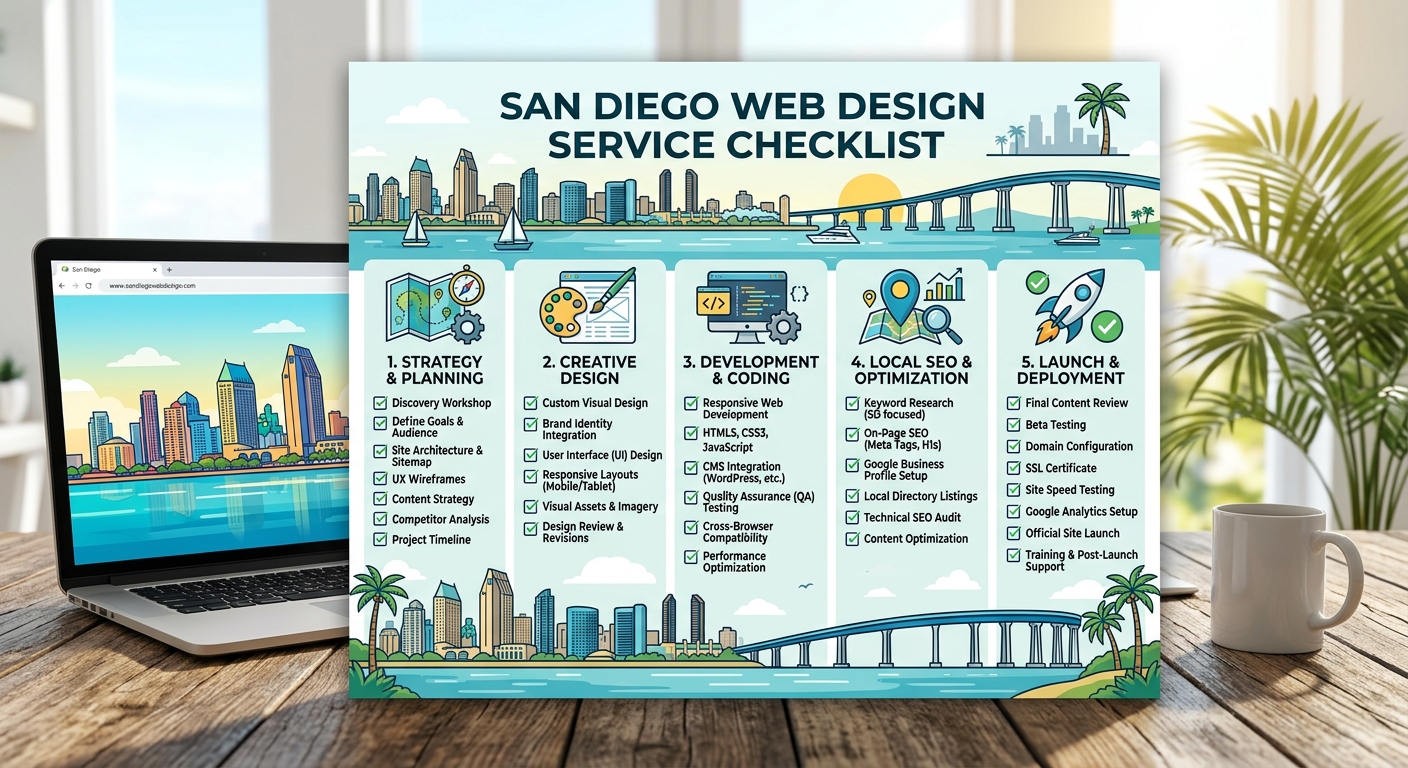
A healthy project moves through five phases:
- Discovery (week 1): we map your audience, your competitors, and your conversion goal. What action should this website produce?
- Strategy and structure (weeks 1–2): sitemap, page goals, keyword targets, and the messaging architecture for each page.
- Design (weeks 2–3): wireframes first, visual design second. You approve direction before pixels get polished.
- Build, SEO, and content (weeks 3–5): development, on-page SEO, schema, and answers-first copy written for both readers and AI.
- Launch and optimize (weeks 5+): move to your domain, verify analytics, then measure — and improve — conversion over the following months.
A predictable timeline is itself a trust signal. A partner who can tell you what happens each week is more likely to deliver a site that works, not just one that looks done.
Frequently Asked Questions about Web Design Services for Small Business
How much does a small business website cost in 2026?
A professional small business website with 5 to 15 pages runs roughly $2,500 to $9,500 (Sprout Sage Solutions, 2026), with most service-based local businesses planning between $4,000 and $15,000 (GruffyGoat, 2026). The price scales with page count, custom design, CMS needs, and whether ecommerce is involved.
What is the ROI of a well-designed website for a small business?
Every $1 invested in user experience returns about $100 (Forrester, 2026). Roughly 84% of companies report satisfaction with their web design ROI (WebFX, 2026), and businesses with websites report about 2x higher revenue growth than those without (Review42, 2026).
How long does a web design project take?
A standard custom small business build takes 3 to 6 weeks (WebFX, 2026). Larger ecommerce or integration-heavy projects can run 6 to 12 weeks. A reputable partner should give you a phase-by-phase timeline up front.
Do I still need SEO if I have a website?
Yes. 46% of Google searches carry local intent (Google, 2026), and 45% of consumers now use AI tools for local recommendations (SOCi, 2026). A site without SEO and AI-visibility work is invisible to most of that traffic, even if it exists.
Should I build my own website or hire a professional?
DIY builders cost as little as $200–$600 a year, but they rarely convert or rank well. A professional build returns $100 per $1 of UX investment (Forrester, 2026) because it is engineered to turn visitors into customers. If your website is a revenue channel — not a hobby — professional help pays for itself.
Conclusion
A small business website in 2026 is a credibility test, a local lead-capture machine, and an AI-visibility asset in one. 75% of consumers judge your business by its design (Stanford, 2026), 46% of searches are local (Google, 2026), and 88% of businesses remain invisible to AI search (Omni Eclipse, 2026). The businesses that treat their site as a strategic investment — built for speed, search, and conversion — consistently outgrow the ones that treat it as a brochure.
Audit your current website against these four jobs. Can it answer a buying question in seconds? Does it convert on mobile? Does it build trust with clean design and fresh reviews? And does it show up when someone — human or AI — asks who you should call? If the answer to any of those is no, that is where your next investment should go.
Web Works LLC builds web design, SEO, and AI automation for small and medium businesses across the US and Canada. We build every site around conversion, local search, and AI visibility — not decoration. Explore our web design and growth services. If you serve a specific market, read our Los Angeles web design guide, San Antonio web design guide, Phoenix web design guide, or San Diego web design guide, or the US-wide web design services roundup.