
In 2026, Clutch’s small business buyer survey found that 61 percent of recent website projects came in under $10,000, down from 68 percent three years earlier . Budgets are tightening while expectations climb. Yet most owners still sign five-figure contracts without a clear answer to one question: what does a custom web development company actually do?
This guide answers it from the builder’s side of the desk. You’ll see what these firms deliver, how engagements run week by week, what builds realistically cost, and the honest cases where you shouldn’t hire one at all. We build these systems ourselves for small and medium businesses across the United States and Canada, so the tradeoffs below come from shipped projects rather than theory. For related reading, our web development guides cover the full topic cluster this post anchors.
Key Takeaways
- A custom web development company designs, builds, and maintains software written specifically for your business instead of assembled from reusable themes
- Typical boutique custom builds run $8,000 to $15,000; freelancer-led template work starts near $3,000 (Digital Applied 2026 pricing benchmarks)
- Expect an eight to sixteen week engagement spanning discovery, design, development, and quality assurance (zo.agency 2026 process benchmarks) – Hire custom only when workflows, integrations, or brand differentiation genuinely demand it. Otherwise, keep the money
- About 75 percent of users judge credibility from design alone, which is why discovery matters more than code (Stanford Web Credibility Project)
In this article
What Is a Custom Web Development Company?
A custom web development company plans, designs, codes, and maintains websites built around one client’s specific workflows rather than around a reusable theme. Engagements typically cover UX strategy, interface design, frontend engineering, backend programming, database architecture, third-party integrations, and post-launch support under one accountable contract.
The line separating these firms from template shops is sharper than most buyers expect. Template vendors assemble your pages from prebuilt layouts, drop in your logo and copy, and ship within days. A custom firm starts from an empty repository and asks operational questions first: how do quotes get priced internally, where do leads land, which systems must talk to each other?
That difference shows up in visitor behavior long before anyone reads a testimonial. Stanford’s Web Credibility Project found that roughly 75 percent of users judge a company’s trustworthiness by design alone, a finding published across its credibility research series beginning in 2002. First impressions form even faster. A study led by Gitte Lindgaard measured just 50 milliseconds as the time users need to form a design opinion (Behaviour & Information Technology, 2006).
So why should a half-second verdict matter to your revenue? Because visitors convert or bounce on that impression, and no amount of ad spend fixes a site that reads as untrustworthy at first glance.
A custom web development company designs and codes websites tailored to one business’s exact workflows instead of assembling pages from reusable templates. Services span discovery, UX design, frontend and backend engineering, integrations, QA, and maintenance. Stanford credibility research reports about 75 percent of users judge trustworthiness by design alone, so professional execution directly protects revenue.
How they differ from freelancers and DIY builders
Three structural differences separate the categories:
- Team depth: Firms pair dedicated designers with engineers. Freelancers wear both hats, usually with uneven depth on one side.
- Code ownership: You receive the repository and hosting control. No lock-in if the relationship ends.
- Scope accountability: Fixed-scope contracts define deliverables, deadlines, and acceptance tests before work starts.
What a Custom Web Development Company Delivers
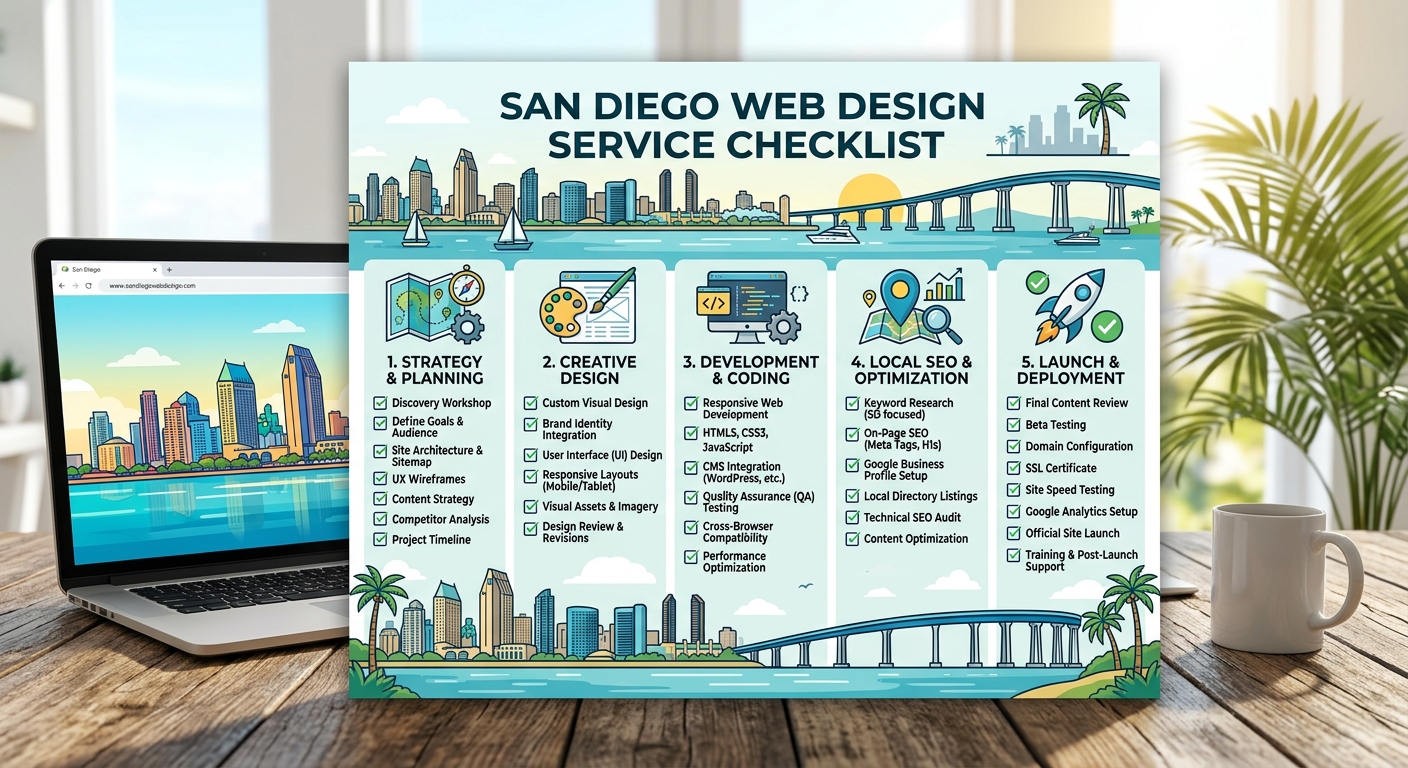
A credible firm hands over seven concrete deliverables, documented before production code begins. What separates a real custom shop from a template reseller wearing an agency badge? Paperwork. Vendors who can’t enumerate the items below in writing are reselling themes behind agency margins.
| Deliverable | What it includes |
|---|---|
| Discovery and scoping documents | Stakeholder interviews, requirements spec, success metrics, sitemap |
| UX and UI design assets | Wireframes, clickable prototypes, responsive visual system |
| Frontend codebase | Hand-built responsive interfaces tested across browsers and devices |
| Backend and database | Server logic, APIs, and data models powering dynamic features |
| CMS configuration | Editor dashboard letting non-developers update content safely |
| Integration layer | Connections to payments, CRM, email, inventory, or booking tools |
| QA report and maintenance plan | Cross-browser results, security hardening, backups, update schedule |
Inside the discovery phase
Discovery decides whether the next twelve weeks run smooth or sideways. Expect structured workshops mapping your customer journey, competitor audits, integration inventories, and agreed conversion metrics such as quote-request rates. Strong firms close the phase with a written specification both parties sign. Ambiguity discovered in week nine gets paid for twice: once in rework, once in delay.

Custom web development companies deliver seven documented outputs: scoping specs, UX prototypes, hand-coded frontends, backend databases, CMS dashboards, integration layers, and QA plans. Each arrives as signed paperwork before coding starts. Buyers comparing vendors should request written specs for every item, because firms unable to produce them typically assemble pre-made templates rather than engineer bespoke systems.
How the Custom Web Development Process Works
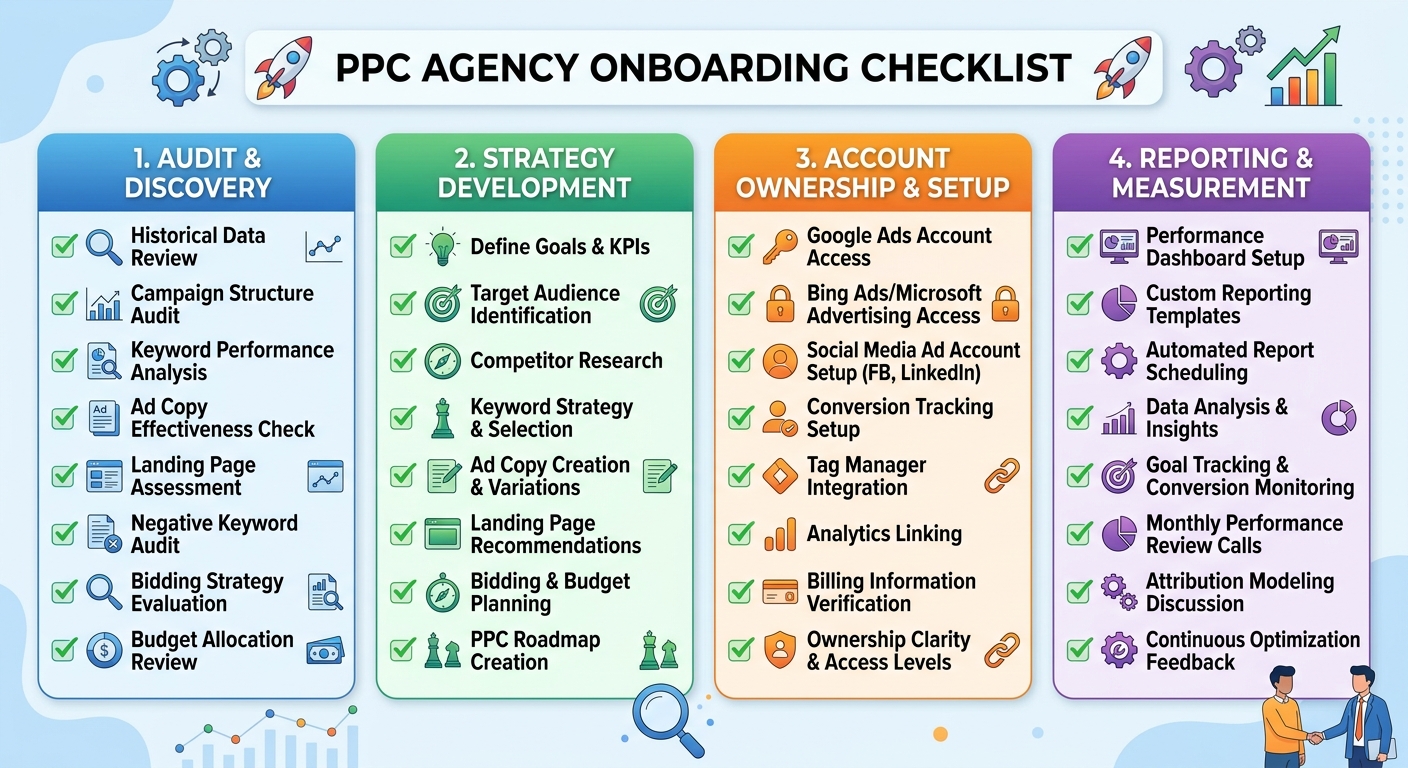
Most engagements follow four phases, and industry benchmarks put the full journey between eight and sixteen weeks (zo.agency process guide, 2026). Discovery runs one to three weeks. Design and prototyping takes another two to four. Development and integrations occupy four to eight weeks depending on complexity, then quality assurance and launch wrap up in one to three.
Where do timelines actually slip? Almost never inside the coding. Slippage concentrates at discovery sign-off and late-stage content delivery, when clients still owe photography, product copy, or legal text.
Artificial intelligence keeps compressing those numbers. In 2026 benchmarking compiled by Digital Applied from GoodFirms and WebFX research, agencies reported AI-assisted workflows cutting typical build times by 22 to 34 percent year over year. Code generation handles boilerplate quickly; humans still own judgment calls like information architecture and accessibility standards.
Across our delivered builds, projects where discovery ran its full two to three weeks consistently finished sooner overall than compressed-start jobs. Deep early questioning prevents the mid-build rework that adds weeks later. Rushed discovery doesn’t save time; it borrows it from the schedule’s back half, with interest.
Custom web development runs four phases: discovery lasting one to three weeks, design and prototyping for two to four, development and integrations across four to eight, and final QA within one to three. Complete engagements typically take eight to sixteen weeks per 2026 benchmarks, though AI-assisted coding has trimmed average build times by 22 to 34 percent.
How Much Custom Web Development Costs in 2026
Boutique agencies typically invoice $8,000 to $15,000 for custom builds, while freelancer-led template work starts near $3,000, according to Digital Applied’s 2026 analysis of Clutch survey data. Enterprise platforms clear six figures, but that tier sits outside small-business reality.
Why are buyers spending less while expecting more? Competition among studios has intensified as AI tooling lowers production overhead, pushing quality up and prices down simultaneously. The same dataset shows 61 percent of SMB projects landing under $10,000 (down from 68 percent in 2023) and 84 percent under $20,000 (down from 89 percent).
Four drivers move your number more than vendor choice does:
- Unique page count beyond the homepage
- Integrations, each external system adding scope
- Content production, when copy and photography come from the firm
- Compliance needs, including accessibility targets or industry regulations
The most common budget failure isn’t overspending up front. It’s the $10,000 project that becomes $14,000 because scope crept after signing: one extra integration here, a revised homepage there. Fix it contractually. Require written change-order approval above a set dollar threshold, and your invoice matches the estimate.
Those shifting bands matter for planning too. Comparing Clutch’s buyer surveys across years shows the share of projects under $10,000 falling six points while spend concentrates in the middle ranges rather than disappearing. Owners aren’t abandoning custom work; they’re buying it leaner.
Every dollar here eventually lands on a balance sheet somewhere, which is why pairing this spend with financial clarity as a growth catalyst turns a cost center into a measurable investment decision.
Custom website builds from boutique agencies typically cost between $8,000 and $15,000 in 2026, while freelancer template work starts around $3,000 according to Clutch survey data compiled by Digital Applied. Page count, integrations, content production, and compliance requirements move final pricing more than vendor selection does. Sixty-one percent of small business projects now land under $10,000.
Custom Build vs Template: Which Fits Your Business?
Choose custom when your website must execute business logic, connect operational systems, or carry a brand that competes on experience. Choose a template when it needs to exist, look professional, and publish content. Could an off-the-shelf theme have handled your quoting workflow, member portal, or inventory sync? Then the honest answer is no, and pretending otherwise wastes either your budget or your patience.
Run these five signals before deciding:
| Signal | Points toward custom | Points toward template |
|---|---|---|
| Workflow complexity | Multi-step quoting, portals, scheduling logic | Brochure pages, blog, contact form |
| Integrations | CRM, ERP, payments tied to daily operations | Standard plugins cover the need |
| Differentiation | Brand is the moat; unique UX wins deals | Commodity category, price-led sales |
| Budget ceiling | $15K+ justified by revenue impact | Total spend under $5K |
| Timeline pressure | Eight to sixteen weeks acceptable | Live within days |
When you shouldn’t hire a custom web development company
Skip custom entirely in four situations. You’re pre-revenue and validating an idea. Your site is a digital brochure for a local service business where referrals drive everything. You need something live this week for an event or launch deadline. Or cash reserves sit below three months of operating expenses, making any five-figure outlay risky regardless of return.
That said, modern builds increasingly ship automation-ready, meaning forms route to AI triage, content updates trigger workflows, and analytics feed dashboards automatically. If those capabilities sit on your roadmap within two years, read our breakdown of AI automation advantages for small business before locking a platform choice, because retrofitting automation onto the wrong architecture costs more than building it in.
Businesses should choose custom web development when sites must execute complex workflows, integrate with operational systems like CRM or ERP, or differentiate through unique user experience. Templates remain the right call for brochure-style needs, tight budgets under $5,000, or launches required within days. Running the five-signal framework prevents both overspending and under-building.
What Results Should You Expect From a Custom Site?
Set expectations around three measurable outcomes rather than vague promises: conversion rate improvement on primary actions, page speed gains against your previous site, and reduced manual work through integrations. Any firm promising guaranteed rankings is selling fiction; Google’s own documentation states no one can guarantee placement.
Context matters here. By 2025, Clutch’s annual survey reported 83 percent of US small businesses had websites, up from 64 percent in 2018 (Clutch Small Business Websites report). Standing out now requires more than existing online, which is exactly where tailored UX earns its keep.
Mobile performance deserves special scrutiny. As of the first quarter of 2026, Statista measured mobile devices carrying 52.27 percent of global website traffic, so a custom build that only shines on desktop screens forfeits half its audience by default.
What should you actually measure once launch day passes? Baseline your old metrics first, then track form completions, call clicks, and organic entrances monthly for at least two quarters before judging ROI.

Custom websites should be evaluated on conversion rates, page speed improvements, and automation time savings rather than guaranteed search positions, which no firm can promise. With 83 percent of US small businesses operating websites as of 2025 and mobile devices carrying over half of global traffic in early 2026, differentiated user experience has become the measurable advantage bespoke builds provide.
Choosing the Right Custom Web Development Company
Evaluate candidates against five criteria before signing anything:
- Shipped examples in your complexity class, not just pretty portfolios of simple sites
- Written discovery process with named deliverables and sign-off gates
- Code ownership terms stating you receive repositories and hosting access
- Post-launch support scope covering response times, not just a warranty line
- References you can call, ideally two clients whose projects finished within the last year
Questions to ask before signing
Ask each finalist these questions and score their specificity:
- What happens to my codebase if we stop working together?
- Which integrations have you shipped that resemble mine?
- How are change orders priced and approved after signature?
- Who owns design assets, and can another developer extend them?
- What does month thirteen cost, and what does it include?
Vague answers on integration history deserve extra suspicion.
Reviewing competitor quotes alongside our own clients’ projects, requirements involving connected systems routinely push proposals from four-figure territory into five, yet many sales conversations never mention integrations until after deposit. A firm that raises them during the first call respects your budget; one that discovers them mid-build doesn’t.
Red flags cluster too: requests for full payment upfront, refusal to use contracts with acceptance criteria, portfolios without live URLs, and pricing delivered verbally only.

Selecting a custom web development company should follow five checks: verified shipped projects of similar complexity, documented discovery processes, explicit code ownership transfer, defined post-launch support, and callable references. Ask specifically about integration experience and change-order pricing, since unmentioned system connections commonly inflate final invoices well above initial quotes.
FAQ: Custom Web Development Questions Answered
What does a custom web development company actually do?
It designs, codes, and maintains websites built specifically for your business instead of assembling them from pre-made themes. Engagements cover discovery documentation, UX design, frontend and backend engineering, integrations with tools like CRM or payments, and post-launch support. Because Stanford research shows 75 percent of users judge credibility by design alone, that bespoke execution carries direct revenue weight.
How much does a custom website cost in 2026?
Boutique agencies typically charge $8,000 to $15,000 for custom builds, while freelancer-led template work starts near $3,000 (Digital Applied 2026 benchmarks). Sixty-one percent of small business projects landed under $10,000 this year per Clutch survey data. Page count, integrations, and content requirements move your final number more than vendor reputation does.
How long does a custom website take to build?
Plan for eight to sixteen weeks end to end (zo.agency 2026 benchmarks): discovery runs one to three weeks, design two to four, development four to eight, and QA one to three. AI-assisted coding has cut average build times by 22 to 34 percent, though discovery and design still require human judgment.
Is a custom website worth it for a small business?
Worth depends on workflow complexity, not business size. If your site must execute quoting logic, connect operational systems, or differentiate a competitive brand, custom pays for itself through conversions and saved admin hours. If you need a professional brochure online, templates deliver 90 percent of the value at a third of the cost.
Why SMBs Choose Web Works for Custom Web Development
Web Works LLC builds custom websites for small and medium businesses across the United States and Canada as one piece of an integrated Growth Suite covering web development, SEO, and AI automation. Four things separate our engagements from the typical agency experience:
- One accountable team: Designers, developers, and automation specialists plan together from day one, so your site ships ready for SEO and AI workflows rather than needing a retrofit.
- Fixed, scoped pricing: Quotes align with the published bands above, and change orders require written approval before work begins.
- Post-launch support included: Maintenance windows, backups, and update coverage come standard instead of being sold back separately after go-live.
- Plain-English delivery: No offshore handoffs mid-project and no jargon walls between you and your own build.
We’ll also tell you when we’re not the right fit. Pre-revenue ideas and simple brochure sites get an honest recommendation toward lighter options, because trust outlasts any single invoice.
Ready to scope it properly? Start my project scope and we’ll map your workflows, integrations, and budget band in a single discovery call, then send the written specification before you commit a dollar.
The Bottom Line
A custom web development company earns its fee by translating how your business operates into software that works the same way. The decision framework is short: complex workflows, real integrations, or brand differentiation justify the $8,000 to $15,000 boutique band; everything else belongs on a template.
Costs are falling and build times are compressing as AI tooling matures, but discovery quality still separates projects that finish on budget from those that quietly double. Choose the partner who documents before they code.