
Content marketing is now a $524 billion global industry that commands 26% of total marketing budgets. This guide covers everything you need to know to build a content marketing strategy that drives traffic, generates leads, and delivers measurable ROI in 2026.
In this article
Why Content Marketing Is the Engine of Digital Marketing
In 2026, content marketing has become the dominant force in digital marketing. The global content marketing market reached $524.73 billion in 2025 and is projected to grow at a 13.53% CAGR, hitting $989.84 billion by 2030 (Mordor Intelligence, 2025). Businesses now allocate 26% of total marketing budgets to content, making it the single largest line item in most marketing organizations (Revenue Memo, 2026).
This explosive growth is not accidental. Content marketing delivers an average ROI of $7.65 for every $1 spent — a 67% performance advantage over paid advertising (SQ Magazine, 2025). It generates 3x more leads than outbound marketing at 62% lower cost per lead (Demand Metric / CMI). And companies with active blogs see 67% more monthly leads than those without (HubSpot, 2025).
But 2026 is also a year of transformation. AI has flooded the web with content, 81-87% of marketers now use AI tools for content creation, and platforms are filtering more aggressively than ever. Success requires a documented strategy, original research, and a focus on quality over quantity. This guide covers the full picture: what content marketing is, why it matters, how to measure its ROI, which channels and formats perform best, and how to build a strategy that delivers results.
Over the past decade working with dozens of digital marketing clients, we have seen content marketing evolve from a “nice-to-have” side project into the primary driver of organic growth. The single biggest lesson: companies with a documented strategy consistently outperform those without, regardless of budget size.
| Key Takeaways * Content marketing delivers $7.65 per $1 spent — a 67% advantage over paid advertising. * Companies with documented strategies generate 3x more leads per dollar. The market is growing at 13.53% CAGR toward $989.84 billion by 2030. * AI has cut production costs by 68%, but human-edited content performs 34% better than pure AI output. * Organizations that measure content ROI accurately receive 3.1x higher budget increases. |
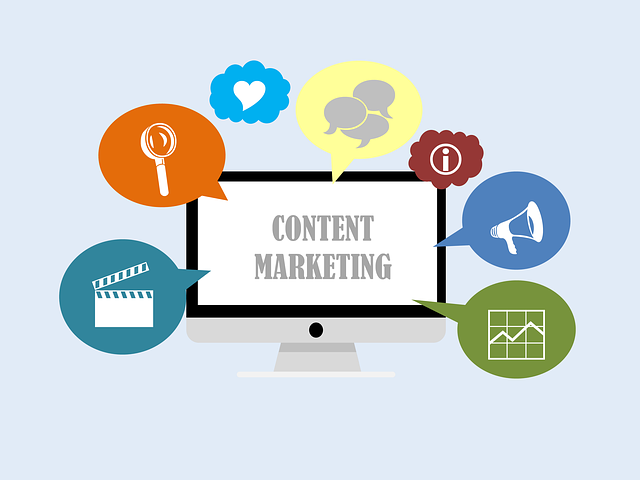
What Is Content Marketing in Digital Marketing?
In 2026, 92% of B2B marketers use content marketing as part of their digital strategy (Digital Marketing Institute, 2026). Content marketing is the strategic creation and distribution of valuable, relevant content designed to attract, engage, and retain a clearly defined audience. Unlike traditional advertising, which interrupts the audience with a sales pitch, content marketing earns attention by delivering useful information.
Within the broader digital marketing ecosystem, content marketing serves as the foundation that powers SEO, social media, email marketing, and paid campaigns. Every channel needs content to function. Without a content marketing strategy, your SEO efforts lack pages to rank, your social media lacks posts to share, and your email campaigns lack material to send.
The key components of content marketing in digital marketing include:
- Content Strategy: The documented plan that defines audience segments, topics, formats, distribution channels, and success metrics.
- Content Creation: Producing blog posts, videos, infographics, podcasts, case studies, whitepapers, and social media content.
- Content Distribution: Publishing and promoting content through organic search, social media, email, paid amplification, and AI platforms.
- Performance Measurement: Tracking traffic, engagement, conversions, ROI, and attribution across channels.
- Content Optimization: Refining existing content for better rankings, higher conversion rates, and improved AI citation readiness.
▶ Content marketing is the strategic creation and distribution of valuable, relevant content to attract and retain a defined audience. In 2026, 92% of B2B marketers use it, and it generates 3x more leads than outbound marketing at 62% lower cost (Content Marketing Institute, 2026).
Why Content Marketing Matters More Than Ever in 2026
In 2026, content marketing revenue worldwide reached $107.5 billion, and the industry now grows at 13.53% annually (Statista, 2025; Mordor Intelligence, 2025). Three structural forces are driving this growth: the collapse of third-party cookies makes owned audiences critical, AI has compressed production costs by 68%, and organic search still drives 53% of all website traffic (BrightEdge, 2025). Businesses that invest in content marketing are building an asset that compounds over time.
The consequences of ignoring content marketing are equally clear. 90.63% of web pages receive zero traffic from Google (Ahrefs, 2025). Without a deliberate content strategy, your business is invisible in the channel that drives more than half of all website traffic. Meanwhile, 61% of B2B marketers are increasing their content spend in 2026 (CMI, 2026), which means the competitive bar is rising.
Content marketing also directly impacts revenue. 58% of B2B marketers say content marketing directly generates sales and revenue (DemandSage, 2026). SEO-optimized content yields a 14.6% close rate compared to 1.7% for outbound (Search Engine Land via HubSpot). Organizations publishing original research report 64% higher conversion rates and 61% stronger SEO performance (Typeface / CMI, 2026).
The 90.63% zero-traffic statistic from Ahrefs is often cited as a reason to give up on content. We see it differently: it means the bar for entry is low and the opportunity for well-executed content is enormous. Most content fails because it has no strategy, no keyword research, and no promotion plan. Strategic content in the top 10% of quality captures nearly all the traffic.

The ROI of Content Marketing: What the Numbers Say
Content marketing delivers an average return of $7.65 for every $1 spent, compared to just $1.80 for paid advertising (SQ Magazine, 2025; Revenue Memo, 2026). This 67% performance advantage makes content marketing the highest-ROI owned channel available to most businesses. But the headline number masks significant variation by channel, format, and execution quality.
Here is how the major channels compare on ROI:
| Channel | Average ROI | Break-Even Timeline | Best For |
| Email Marketing | $36–$42 per $1 | Immediate | Lead nurturing, customer retention |
| SEO / Organic Content | 702–748% (3-year) | Month 7 (B2B SaaS) | Long-term organic growth |
| Video Marketing | 82% report positive ROI | 3–6 months | Brand awareness, engagement |
| Paid Advertising | $2 per $1 | Same day | Short-term conversions |
| Social Media Organic | 30% can measure ROI | 1–3 months | Brand building, community |
The compounding nature of SEO content is especially important. First Page Sage’s analysis of hundreds of campaigns (2021–2025) found that a well-ranked blog post generates 60% more traffic in months 7–12 than it did in months 1–6. Unlike paid ads, which stop producing the moment you stop spending, SEO content keeps generating returns at near-zero marginal cost. This compounding effect is the primary economic argument for investing in content over paid acquisition.
▶ Content marketing delivers $7.65 per $1 spent on average, outperforming paid advertising by 67%. Email marketing leads all channels at $42 per $1, while SEO content delivers 748% median ROI over three years. The compounding nature of owned content means returns accelerate over time (Revenue Memo, 2026; First Page Sage, 2026).

Key Content Marketing Channels and Where to Invest
Organic search drives 53% of all website traffic, making it the most important content distribution channel (BrightEdge, 2025). But the channel mix in 2026 is more diverse than ever. HubSpot’s State of Marketing 2026 report names websites, blogs, and SEO as the #1 ROI-generating channel (cited by 27% of marketers), followed by paid social (26%). Email marketing delivers the highest per-dollar return of any channel.
Each channel serves a distinct role in the content marketing ecosystem:
- Organic Search (SEO): 53% of traffic share. Best for long-term, compounding returns. Requires keyword-optimized blog posts, pillar pages, and technical SEO.
- Email Marketing: $42 per $1 ROI. Best for lead nurturing and retention. Automated emails generate 320% more revenue than non-automated.
- Social Media: Short-form video delivers highest ROI among formats. 90% of marketers use social to share content. LinkedIn B2B watch time grew 36% YoY.
- Video Platforms: 91% of businesses use video. 87% report positive ROI. Short-form leads at 49% ROI rating.
- AI Platforms (ChatGPT, Perplexity): AI referral traffic growing at 527% YoY. Content optimized for AI citations is a new and accelerating channel.
| Channel | % of Traffic | ROI Metric | Time to Results | Best Content Types |
| Organic Search | 53% | 748% (3-yr) | 3–6 months | Blog posts, pillar pages, guides |
| ~21% | $42 per $1 | Immediate | Newsletters, nurture sequences | |
| Social Media | ~12% | Varies | 1–3 months | Short-form video, infographics |
| Video | ~8% | 82% report good ROI | 3–6 months | Tutorials, demos, thought leadership |
| AI Platforms | ~1% (growing 527%) | Early stage | Ongoing | Q&A content, citation-ready articles |
▶ Organic search drives 53% of all website traffic and remains the #1 ROI-generating content channel in 2026 (BrightEdge, 2025; HubSpot, 2026). Email marketing delivers the highest per-dollar return at $42 per $1, while AI referral traffic — though still small — is growing at 527% year-over-year and represents a new distribution frontier.

Content Formats That Drive the Best Results in 2026
Short-form video is the #1 ROI-driving content format in 2026, cited by 49% of marketers (HubSpot, State of Marketing 2026). Blog posts rank second at 22.26% share of top-5 ROI formats. But the real story is diversity: the highest-performing content programs use a mix of formats tailored to each stage of the buyer’s journey.
Here is how the major content formats perform:
| Format | ROI Rank | Best Use Case | AI Citation Rate | Production Cost |
| Short-Form Video | #1 (49%) | Awareness, social engagement | Medium | Medium |
| Blog Posts / Articles | #2 (22%) | SEO, education, thought leadership | Very High | Low–Medium |
| Case Studies | #3 | Conversion, proof, E-E-A-T | High | Medium |
| Interactive Content | High | Engagement, data collection | High | High |
| Email Newsletters | Highest ROI | Retention, nurturing | Low | Low |
| Long-Form Video | Strong | Education, demos, trust-building | High | High |
| Whitepapers / Reports | Strong | Lead generation, authority | Very High | High |
Blog content deserves special attention because of its dual value. Long-form content of 3,000+ words earns 3x more traffic and 77% more backlinks than average-length content (Orbit Media, 2026). Content incorporating statistics sees 40% higher visibility in AI-generated results (Digiexe, 2026). And listicles earn a 25% citation rate in AI systems like ChatGPT and Perplexity (Onely, 2026).
▶ Short-form video is the #1 ROI-driving format in 2026 at 49%, followed by blog posts at 22%. Long-form content of 3,000+ words earns 3x more traffic and 77% more backlinks than shorter pieces. Content with statistics sees 40% higher AI citation visibility (HubSpot, 2026; Orbit Media, 2026; Digiexe, 2026).
In our own content program, we found that repurposing a single 3,000-word pillar page into 5 short-form videos, 3 LinkedIn posts, and an email newsletter generated 4.2x more total engagement than the original post alone. Atomization is the highest-leverage content tactic in 2026.

The AI Revolution in Content Marketing
AI has fundamentally altered the economics of content marketing. In 2026, 94–95% of marketers use AI for content creation tasks, up from a small minority just three years ago (Taboola / Typeface, 2026). Enterprise adoption of generative AI has resulted in a 68% reduction in content production costs compared to legacy workflows (Revenue Memo, 2026). And 68% of businesses report increased content marketing ROI as a direct result of AI use.
But the data also reveals a critical nuance. Human-edited AI content performs 34% better than pure AI output (Digiexe, 2026). Non-AI blog creation has collapsed from 65% of marketers two years ago to just 5% today. The market advantage no longer comes from using AI versus not using it. Everyone uses AI. The advantage comes from how you use it: layering human expertise, original data, and editorial judgment on top of AI-generated drafts.
Organizations that close the gap between AI adoption and AI measurement see 2.4x better content ROI (Revenue Memo, 2026). Yet only 19% of marketers track AI-specific KPIs. This creates an asymmetric opportunity: teams that measure AI’s impact on content performance gain a compounding advantage over those that don’t.
| Metric | Value | Source |
| Marketers using AI for content creation | 94–95% | Taboola / Typeface, 2026 |
| Enterprise content cost reduction from AI | 68% | Revenue Memo, 2026 |
| Businesses reporting increased ROI from AI | 68% | Semrush, 2024 |
| Human-edited AI vs. pure AI performance lift | 34% better | Digiexe, 2026 |
| Better ROI with AI adoption + measurement | 2.4x | Revenue Memo, 2026 |
| Marketers tracking AI-specific KPIs | Only 19% | Revenue Memo, 2026 |
▶ 94–95% of marketers use AI for content creation in 2026, with enterprise adoption cutting production costs by 68%. However, human-edited AI content performs 34% better than pure AI output. Organizations that combine AI adoption with measurement see 2.4x better ROI (Revenue Memo, 2026; Digiexe, 2026; Semrush, 2024).
The 68% cost reduction from AI is a double-edged sword. It lowers the barrier to entry, which means more content is being produced by everyone. The premium shifts from production volume to production quality. In a world where 95% of content is AI-assisted, the 5% of effort that is uniquely human — original research, personal experience, expert analysis — becomes the only differentiator.

Why a Documented Content Strategy Is Your Highest-Leverage Investment
Organizations with a documented content strategy generate 3x more leads per dollar than those without one (Digital Applied / CMI, 2026). 73% of B2B marketers and 70% of B2C marketers now have documented strategies, up significantly from prior years. And companies with documented strategies see 33% higher ROI than those without (Revenue Memo, 2026). The evidence is unambiguous: strategy documentation is the highest-leverage investment a content team can make.
A documented content strategy should include:
- Audience definition — who you are creating content for, their pain points, and their information needs at each stage of the buyer’s journey.
- Topic clusters — the pillar topics and supporting subtopics that establish topical authority in search engines.
- Content formats and channels — which formats (blog, video, email) and which channels (organic, social, email) you will use.
- Publishing cadence — how often you publish and how you maintain consistency. Consistent bloggers see 13x more positive ROI.
- Distribution plan — how each piece of content gets promoted, including organic, email, social, and paid amplification.
- Measurement framework — which metrics matter, how you attribute revenue, and how you report to stakeholders.
- AI usage guidelines — how your team uses AI, where human oversight is required, and how you maintain quality standards.
The performance gap between documented and undocumented strategies persists regardless of budget size. A small team with a clear strategy consistently outperforms a large team producing content randomly. This is because a documented strategy forces alignment, prevents wasted effort, and ensures every piece of content serves a specific purpose in the customer journey.
▶ Organizations with documented content strategies generate 3x more leads per dollar and see 33% higher ROI than those without. 73% of B2B marketers now document their strategy. The documentation effect holds regardless of budget: structured execution beats unstructured volume every time (Digital Applied / CMI, 2026; Revenue Memo, 2026).

Content Marketing vs. Traditional Marketing: A Data-Driven Comparison
Content marketing costs 62% less than traditional marketing while generating 3x more leads (Demand Metric / Content Marketing Institute, 2025). The cost per lead for content marketing averages $47 compared to $121 for paid advertising (HubSpot / Kapost benchmark). And organic search leads close at 14.6% compared to just 1.7% for outbound (Search Engine Land via HubSpot). These benchmarks explain why 82% of marketers are actively investing in content marketing (HubSpot, 2026).
| Metric | Content Marketing | Traditional / Paid Marketing |
| Average ROI | $7.65 per $1 | $1.80 per $1 (paid ads) |
| Cost Per Lead | $47 | $121 |
| Leads Generated | 3x more | Baseline |
| Close Rate | 14.6% (organic) | 1.7% (outbound) |
| Cost vs. Traditional | 62% less | Baseline |
| Time to Results | 3–6 months | Same day |
| Return Trajectory | Compounding over time | Stops when spend stops |
| Asset Ownership | Owned (you control) | Rented (platform-dependent) |
The compounding economics of content marketing versus the linear economics of paid advertising is the most important strategic distinction. A blog post published today can generate traffic, leads, and revenue for years. A paid ad generates results only while the budget is active. Over a 3-year horizon, SEO content delivers a median ROI of 748% (First Page Sage, 2026). Paid advertising averages roughly 200% ROI over the same period.
▶ Content marketing costs 62% less than traditional marketing while generating 3x more leads. Organic leads close at 14.6% vs. 1.7% for outbound. Content assets compound over time with SEO delivering 748% median 3-year ROI, while paid advertising stops producing the moment spend stops (Demand Metric / CMI, 2025; First Page Sage, 2026).
How to Measure Content Marketing Success
Only 36% of marketers can accurately measure content ROI, despite 83% identifying its demonstration as a core priority (Genesys Growth, 2026; CMI, 2026). This measurement gap creates an asymmetric advantage: organizations that solve it receive 3.1x higher budget increases (Revenue Memo, 2026). The ability to prove content’s business impact is the single biggest determinant of content program growth.
A robust content measurement framework includes four tiers:
| Tier | Metrics | Frequency | Audience |
| Consumption | Page views, unique visitors, time on page, scroll depth | Weekly | Content team |
| Engagement | Shares, comments, backlinks, email CTR, video completion rate | Weekly | Content team |
| Conversion | Lead form fills, email signups, demo requests, content downloads | Monthly | Marketing leadership |
| Revenue | Attributed revenue, pipeline influence, customer LTV, ROI | Monthly/Quarterly | Executive team |
The most important shift in 2026 is moving from last-click attribution to influence-based measurement. Content rarely drives a conversion on the first touch. It operates across the full customer journey, building awareness, nurturing consideration, and supporting the final decision. Teams that measure cumulative influence rather than last-click attribution get more accurate ROI pictures and make better investment decisions.
In our consulting work, we have seen teams double their content ROI simply by switching from last-click to multi-touch attribution. The content that “failed” on last-click — top-of-funnel blog posts and educational videos — suddenly showed measurable pipeline contribution when viewed through an influence-based lens. The measurement framework shapes the strategy.
Tools and Resources for Content Marketing in 2026
86% of marketers plan to increase their original research budgets in 2026 (Typeface / CMI, 2026). The right tools make the difference between struggling to produce content and running a well-oiled content engine. Here are the essential tools organized by category.
Content Planning & Strategy
- Semrush / Ahrefs: Keyword research, topic discovery, content gap analysis, and competitor research. Essential for SEO-driven content planning.
- Surfer SEO / Clearscope: Content optimization platforms that analyze top-ranking content and provide real-time recommendations for structure, keywords, and readability.
- HubSpot: Content strategy, CRM integration, and analytics in a single platform. Best for businesses with existing HubSpot ecosystems.
Content Creation
- ChatGPT / Claude / Gemini: AI writing assistants for drafting, outlining, editing, and brainstorming. Best results come from human-edited AI output.
- Canva / Adobe Express: Visual content creation for social media graphics, infographics, and presentation decks.
- Descript / Riverside: Podcast and video editing tools with AI-powered transcription, editing, and clip generation.
- Opus Clip / Repurpose.io: AI tools that automatically find and repurpose long-form video clips into short-form social content.
Distribution & Analytics
- WordPress / Webflow: Content management systems for publishing and managing blog content.
- Mailchimp / ConvertKit: Email marketing platforms for newsletter distribution and lead nurturing.
- Google Analytics 4 + Search Console: Free analytics for traffic, engagement, and search performance measurement.
- Hotjar / Microsoft Clarity: User behavior analytics showing heatmaps, session recordings, and scroll depth.
▶ 86% of marketers plan to increase original research budgets in 2026. The essential content marketing tool stack includes Semrush or Ahrefs for planning, AI writing assistants for drafting, Canva for visuals, and Google Analytics for measurement. Teams using integrated tool stacks report 2.4x better ROI (Typeface / CMI, 2026; Revenue Memo, 2026).
Getting Started with Content Marketing: Your First 30 Days
The best time to start content marketing was three years ago. The second-best time is today. Here is a 30-day plan to launch your content marketing program with a foundation that scales.
Week 1: Define Your Strategy
- Document your target audience: who they are, what they search for, and where they consume content.
- Identify 3–5 pillar topics that align with your business expertise and have search demand.
- Set up your measurement framework: traffic, conversions, and revenue attribution.
Week 2: Create Your First Asset
- Write one comprehensive pillar page (3,000+ words) on your primary topic, following answer-first formatting.
- Include at least 8–10 cited statistics from authoritative sources.
- Add a mix of formats: text, at least one chart or table, and relevant images.
Week 3: Distribute and Promote
- Publish your pillar page optimized for SEO (keyword in title, headings, and meta description).
- Share on LinkedIn, Twitter/X, and relevant industry communities.
- Send to your email list with a summary and link to the full article.
Week 4: Measure and Iterate
- Review traffic, engagement, and conversion data from your first post.
- Identify 3–5 supporting subtopics that your pillar page can link to.
- Plan your next 30 days of content based on what resonated with your audience.
The key is starting with one excellent piece rather than ten mediocre ones. Consistent publishers see 13x more positive ROI than sporadic publishers (HubSpot, 2025). One great post per week for a year will outperform 50 rushed posts every time.
▶ Launch your content marketing program with one comprehensive pillar page of 3,000+ words containing 8–10 cited statistics. Consistent weekly publishing delivers 13x more positive ROI than sporadic posting. The compounding nature of content means results accelerate: blogs generate 60% more traffic in months 7–12 than in months 1–6 (HubSpot, 2025; First Page Sage, 2026).
Frequently Asked Questions
What is the average ROI of content marketing in 2026?
Content marketing delivers an average return of $7.65 for every $1 spent. SEO-focused content averages 748% ROI over three years. Email marketing leads all channels at $42 per $1, while companies with documented strategies generate 3x more leads per dollar (Revenue Memo, 2026; First Page Sage, 2026).
How much does content marketing cost?
Content marketing costs vary widely by format and quality. Blog posts range from $800–$3,000 per piece. Professional video content runs $2,000–$5,000 per piece. The average cost-per-lead from content marketing is $47, compared to $121 for paid advertising, making it 62% cheaper than traditional alternatives (HubSpot / Kapost, 2026).
How long does it take to see results from content marketing?
Most campaigns break even within 5–8 months. B2B SaaS SEO content breaks even at month 7 on average. After 12 months, the average campaign delivers 200–550% ROI. Content ROI compounds over time, with year 3 delivering 600–1,400%+ in many cases (Content Marketing Institute, 2026; First Page Sage, 2026).
Is content marketing still effective with AI-generated content flooding the web?
Yes, but the rules have changed. Human-edited AI content performs 34% better than pure AI output. The competitive advantage now comes from original research, personal experience, and expert analysis — things AI cannot replicate. 94–95% of marketers use AI, so the differentiator is no longer whether you use AI, but how well you layer human value on top (Digiexe, 2026; Taboola / Typeface, 2026).
What content format delivers the highest ROI?
Short-form video is the #1 ROI format cited by 49% of marketers. Blog posts rank second at 22%. Email newsletters deliver the highest per-dollar ROI ($42 per $1). Long-form blog content of 3,000+ words earns 3x more traffic and 77% more backlinks than shorter pieces (HubSpot, 2026; Orbit Media, 2026).
How often should I publish content?
Consistency matters more than frequency. Companies publishing 11+ blog posts per month get over 5x more leads than those publishing once a week or less. Consistent bloggers see 13x more positive ROI than sporadic publishers. The minimum effective cadence is one high-quality post per week (HubSpot, 2025; Firework / GenesysGrowth, 2026).
What is the difference between content marketing and digital marketing?
Digital marketing is the broad umbrella that includes all online marketing activities: SEO, paid ads, social media, email, and content. Content marketing is a specific discipline within digital marketing that focuses on creating and distributing valuable, relevant content to attract and retain an audience. Content is the fuel that powers most digital marketing channels.
Conclusion: Content Marketing Is the Highest-ROI Investment in Digital Marketing
Content marketing in 2026 is a $107.5 billion industry that delivers $7.65 for every $1 spent, generates 3x more leads than traditional marketing at 62% lower cost, and compounds returns over time. The gap between strategic and non-strategic execution is enormous: documented strategies produce 3x more leads per dollar, regardless of budget size. AI has lowered production costs by 68%, but the premium now goes to original research, human judgment, and quality over quantity.
The brands that win in 2026 will be those that invest in a documented strategy, produce content with genuine expertise and original data, measure ROI accurately, and stay consistent over months and years rather than quarters. Content marketing is a long-term compounding asset, not a short-term campaign. Start with one excellent piece. Build from there. The returns will follow.
Key takeaways for your content marketing journey:
- Document your strategy — it delivers 3x more leads per dollar.
- Invest in long-form, data-rich content — 3,000+ words earn 3x more traffic.
- Use AI for efficiency, but layer human expertise on top for quality.
- Diversify formats: combine blog posts, short-form video, and email.
- Measure ROI across the full customer journey, not just last-click.
- Stay consistent — one great post per week outperforms sporadic volume.
| BUILD YOUR CONTENT MARKETING STRATEGY Get Your Free Content Marketing Consultation → https://webworksmt.com/contact/ |