
Vet 3–5 firms before you commit — it’s the single best way to avoid a costly mistake. About 78% of mid-market firms outsource development (Keyhole/ISG, 2026), so comparison shopping is the norm. This checklist gives US and Canadian SMB owners the six criteria that separate a real partner from a sales pitch.
Key Takeaways
- Portfolio must show verifiable results, not just logos.
- Tech-stack fit matters: find the stack quality for your use case (React dashboards, Node/Python/.NET backends).
- US/Canada timezone and plain-language communication often beat lower hourly rates.
- Get a transparent pricing model and an annual maintenance number up front.
- The contract must say you own the code — non-negotiable.
In this article
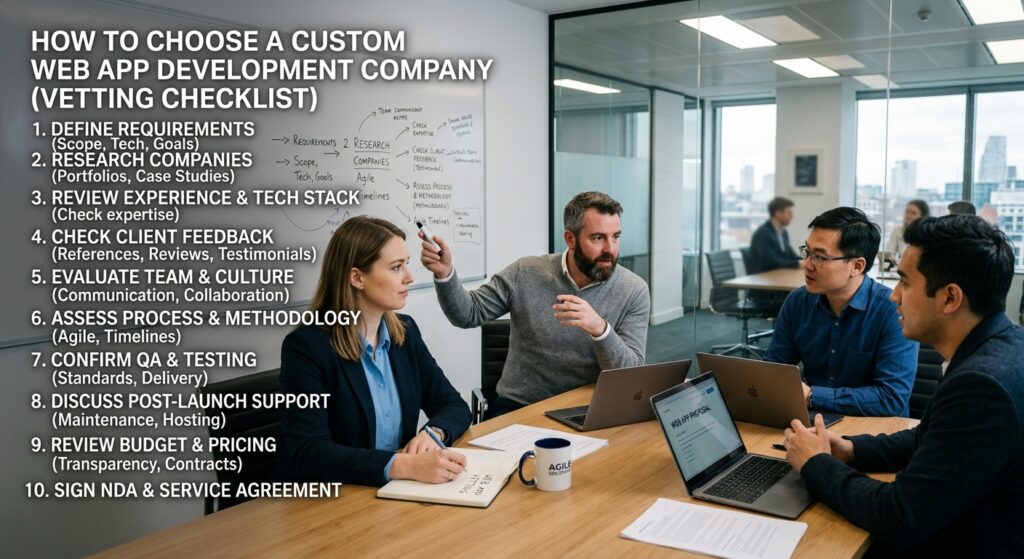
The Six-Point Vetting Checklist
1. Portfolio with Verifiable Results
Logos are marketing; results are evidence. Ask for a case study with figures you can validate — timeline, budget, and outcome. Red flag: a partner who can only show design mockups or refuses to share real project details.
2. Tech-Stack Fit for Your Use Case
The right company explains why a stack fits your goals. Ask them to name and justify:
- Frontend: React, Next.js, or Vue — for interactive dashboards and portals.
- Backend: Node.js, Python/Django, Laravel, or .NET — for business logic and secure API handling.
- Database: PostgreSQL, MongoDB, or MySQL.
- Infrastructure: AWS or Azure, serverless or containers.
If they can’t connect the stack to your business need, that’s a signal. Our tech stack guide explains the layers so you can hold the conversation as an informed buyer.
3. Communication and Timezone
For US/Canadian SMBs, overlapping hours and plain-language updates matter more than raw rates. You should know who your daily contact is and how progress is reported — weekly demos, not black-box updates.
4. Transparent Pricing Model
You should understand whether you’re on fixed-price, time-and-materials, or a hybrid — and why that model fits your project. A partner who can’t explain the model is a red flag. See the real cost bands before you compare quotes — and note those bands shift by industry, so check web app MVP cost by industry for your sector’s realistic range.
5. Post-Launch Support
Maintenance and iteration are the long-term cost — typically 15–25% of build cost per year. The proposal should include this number up front, alongside security patches and feature work. Know what a fair contract includes before you negotiate; our web app maintenance & support guide covers cost, contracts, and what’s included.
6. IP Ownership
The contract must state you own the code and your data. Any partner who resists an IP clause is disqualifying.
Local, Near-Shore, or Offshore?
Location is a real tradeoff, not a virtue signal:
Senior North American developers bill $120–$220+ per hour versus $30–$80 offshore (sam-solutions, 2026). For an SMB, the higher rate often buys you shorter feedback loops, fewer misunderstandings, and easier in-person or synchronous work — which frequently nets out cheaper over the life of the project.
Questions to Ask in Your First Call
- “Can you show me a project like mine with real numbers, and walk me through what went well and what didn’t?”
- “Why is your stack the right fit for my use case specifically?”
- “Who will I talk to daily, and how do you report progress?”
- “What’s your pricing model, and what would maintenance cost per year?”
- “Can I see the IP and ownership clause in the draft contract?”
For the bigger decision of whether to build at all, start with custom vs. off-the-shelf software — then use this checklist once you know you’re building. If you’re a service business weighing a client portal for a bookkeeping firm, that’s a great first project to test a partner against these criteria. And for the complete picture, the SMB buyer’s decision guide ties it all together.
Frequently Asked Questions about Choosing a Custom Web App Development Company
What should I look for in a custom web app development company?
Portfolio with verifiable results, tech-stack fit, US/Canada communication and timezone alignment, transparent pricing, post-launch support, and full IP ownership of the code.
How many companies should I vet before committing?
Vet 3–5 firms. About 78% of mid-market firms outsource development (Keyhole/ISG), making comparison the norm.
Should I hire locally, near-shore, or offshore?
For US/Canadian SMBs, overlapping timezones and clear communication often outweigh lower offshore rates. Weigh seniority, IP control, and support against hourly savings.
Conclusion
The right partner is one you can verify: real results, a stack that fits, clear communication, transparent pricing, real support, and clean IP ownership. Vet 3–5 firms against this checklist and only sign when every criterion is met.
Ready to evaluate a partner? Talk to the Web Works development team — and ask us these exact questions. If we’re not the right fit, we’ll tell you.